Home / On Campus Programs / Sterile Processing Technician
Sterile Processing Technician Certificate Program
Classes Start November 4
Train for a Career in Surgical Support in our 9-Month Certificate Program
ABHES Accredited
On Campus | Hybrid*
At a Glance
~9 Months
Course length
155
Lab hours
345
Class hours
400
Externship hours
*Hybrid education options not available at all campuses
About the Sterile Processing Technician Certificate Program
Where the Sterile Processing Technician Certificate Program Can Take You
Certification
Pima Medical Institute's Sterile Processing Technician certificate program prepares graduates to apply to sit for the Certified Registered Central Service Technician (CRCST) exam through the Healthcare Sterile Processing Association (HSPA).*
Find out more
Entry-level roles
Sterile processing technician and central service technician
Career advancement
Sterile processing supervisor, central service manager, surgical instrument specialist and CRCST-certified technician lead
*Certification and state registration requirements vary.
Core Skills You’ll Develop
Clinical
Principles of microbiology, infection prevention and epidemiology in healthcare
ADMINISTRATIVE
Surgical case cart prep and operating room delivery systems and regulatory standards (AAMI, CDC, OSHA, FDA and The Joint Commission compliance)
PROCESSING
Sterilization methods, quality assurance (biological indicators, chemical integrators and Bowie-Dick testing) and central service department workflow (Decontamination Zone vs. Prep & Pack vs. Sterile Storage)
DECONTAMINATION
Decontamination protocols, personal protective equipment (PPE) and chemical safety
INSTRUMENTATION
Surgical instrument identification, function and care (general, orthopedic, laparoscopic, cardiac)
TERMINOLOGY
Medical terminology and basic human anatomy
Program Objective
To develop in students the intrapersonal and professional skills needed to perform as competent entry-level sterile processing technicians through didactic instruction, hands-on laboratory practice, and externship experiences. Among the topics covered in the curriculum are surgical instruments, microbiology, medical equipment, surgical terminology, storage and distribution, skills required for sterilization and decontamination, and other topics necessary to be effective members of the sterile processing technician team. Graduates of this program receive a certificate and are eligible to apply to take the Certified Registered Central Service Technician examination through the Healthcare Sterile Processing Association. The courses within the program are acceptable for credit toward PMI’s Health Care Administration Associate of Applied Science Degree Program.
Hybrid Learning Options
All courses are taught on campus to ensure you get the hands-on clinical experience this program requires. For students who need more flexibility in their schedules, hybrid learning options are available at select campuses, combining in-person instruction two days a week with online learning three days a week. Externship hours are completed fully in person.
*Not all programs offer hybrid learning options; Hybrid education options not available at all campuses

Find a Campus Near You
Pima Medical Institute has campuses across the West, each offering hands-on Sterile Processing Technician training built for immediate workforce entry.
Clinical Externships
At Pima Medical Institute, most programs allow students to work in their field through clinical externships—a chance to be mentored by full-time professionals and interface with real patients.
In addition to real-world experience, clinical externships offer students resume-worthy opportunities, letters of recommendation from supervisors and sometimes job placement directly after graduation.
Continuing Education
Continue with Health Care Administration, an online Bachelor of Science in Health Care Administration and an online Master of Science in Organizational Leadership.
Job Outlook
10% Growth — The Bureau of Labor Statistics projects this occupation to grow faster than average over the next 10 years with a median pay of $46,490 per year. *
*Source: Bureau of Labor Statistics, U.S. Department of Labor, Occupational Outlook Handbook, Medical Equipment Preparers,
https://www.bls.gov/ooh/about/data-for-occupations-not-covered-in-detail.htm#Healthcare (visited June 07, 2026).
What careers can you pursue with a Sterile Processing Technician certificate?
The Sterile Processing Technician certificate program prepares students to apply for roles and other related career opportunities including:
- Sterile processing technician
- Central service technician
Sterile Processing Technicians work in a variety of environments including hospital Central Sterile Supply Departments (CSSD), outpatient ambulatory surgical centers (ASC), dental surgery clinics and specialty surgical practices, endoscopy suites and cardiac catheterization labs and medical equipment sterilization contract companies.
Career Services
When you’re a Pima Medical Institute student, you get access to our Career Services team—here for you when you need extra help with finding the right job opportunities, building a resume, strengthening your interview skills or just looking for general guidance.
Student Services
Our team of student service professionals are on hand to see students through the challenges they might face during their academic career. We offer guidance and resources to ultimately help build employable medical professionals.
Application Process
- Submit the form below
A few quick details so we can get to know you before we connect.
- Chat with our team
They’ll ask about your goals, your background, and what’s drawing you to healthcare. From there, they’ll help you find the right program and campus for where you are in life right now.
- Attend your campus tour
Experience Pima Medical in person and picture yourself in a career that matters. We’ll walk you through programs and what to expect.
- We help you complete your application
Our team guides you through every step, including enrollment and financial services, so nothing stands between you and getting started.
Sterile Processing Technician Certificate Program Eligibility Requirements
- Possess a high school diploma or recognized equivalency
- Additional requirements may apply by campus

Tuition & financial aid
Federal aid (FAFSA), institutional scholarships and payment plans are available for those who qualify to help make your education affordable.
Program Outline
Learn more about the courses in this program.
Career Prep Sequence
Professional Sequence I
Professional Sequence II
Professional Sequence III
Externship
Nobody Says It Better Than Our Students
Read our reviews from students and alumni to find out for yourself…
FAQs About our Sterile Processing Technician Certificate Program
What Is a Sterile Processing Technician?
A sterile processing technician is a valuable member of a medical care team. They are in charge of maintaining the cleanliness, functionality and inventory of healthcare instrumentation and equipment, working mainly in the sterile processing and distribution areas of healthcare facilities.
What Does a Sterile Processing Technician Do?
The day-to-day responsibilities of a sterile processing technician include sterilizing instruments and equipment through a series of critical steps. This important work ensures patients avoid infections and healthcare professionals are able to access the tools they need immediately..
What will I learn?
Through classes taught by experienced instructors and hands-on training, students in the Sterile Processing Technician certificate program will learn how to properly sterilize instruments and equipment through proper decontamination procedures, implement infection control practices, understand microbiology, and provide equipment access for doctors, nurses and other health professionals as needed.
How Do I Get Certified as a Sterile Processing Technician After Graduation?
Graduates of the program from this school can take the central sterile processing exam offered by the Healthcare Sterile Processing Association (HSPA). This program is based on the HSPA Certification: CRCST.
Credential | Organization |
Certified Registered Central Service Technician (CRCST)
| HSPA (Healthcare Sterile Processing Association)
|
*Availability and requirements vary by state.
Is national certification required to work in sterile processing?
An increasing number of states (such as New York, New Jersey, Connecticut, Tennessee, and Pennsylvania) require sterile processing technicians to hold national certification (such as HSPA CRCST). Even in states where it is not mandated by law, the vast majority of hospital systems require or prefer certified technicians.
What experience will I gain in the externship?
Students complete a 400-hour supervised clinical externship in a hospital central sterile department, fulfilling the hands-on practice requirement needed for full national CRCST certification.
During the externship, students have the opportunity to:
- Decontaminate, inspect, assemble, and sterilize actual surgical trays used in live operating rooms
- Operate industrial autoclaves, washer-disinfectors, and heat-sealing equipment
- Work directly alongside experienced central service managers and surgical staff
- Fulfill the exact hands-on clinical hours required by HSPA for permanent certification
Why Choose Sterile Processing?
Every successful surgical procedure relies on sterile processing technicians to prevent hospital-acquired infections and ensure surgeons have precise, safe, and fully functional instruments.
Sterile Processing Technicians perform responsibilities such as:
- Decontaminating soiled surgical instruments and medical equipment using automated washers and ultrasonic cleaners
- Inspecting surgical tools for cleanliness, alignment, sharpness, and defects
- Assembling complex surgical instrument sets according to specific surgical specialty case trays
- Operating autoclave sterilizers (steam, ethylene oxide, hydrogen peroxide gas plasma)
- Monitoring biological, chemical, and physical sterilization indicators to verify sterile conditions
- Packaging, wrapping, and labeling sterile instrument trays for operating room delivery
- Managing central service inventory, case carts, and sterile storage areas
What are sterile processing technicians commonly called?
Sterile Processing Technicians may also be referred to as:
- Central Service Technician (CRCST)
- Sterile Processing & Distribution (SPD) Technician
- Surgical Inventory / Medical Equipment Technician
*Designations depend on state regulatory board terminology.
How long is Pima Medical Institute’s Sterile Processing Technician program?
Pima Medical Institute’s Sterile Processing Technician Certificate program takes 9 months to complete.
*Individual completion times may vary.
Pima Medical Blog
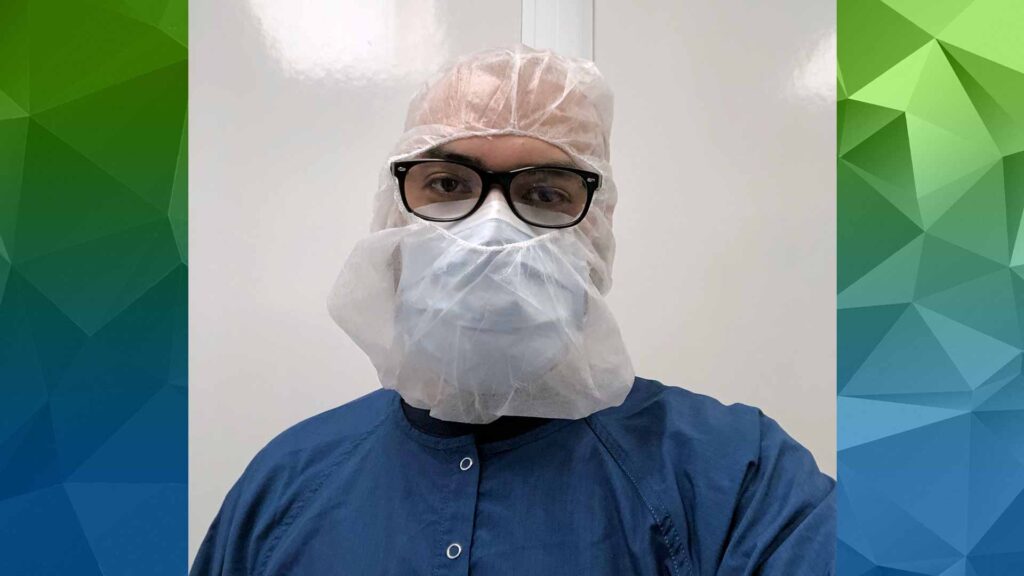
Family Ties to Pima Medical Helped this Phoenix Graduate Find a Career he Loves
Arthur Zamora graduated from the Sterile Processing program at our Phoenix campus in 2017. He says his aunt’s encouragement helped him to find a career…
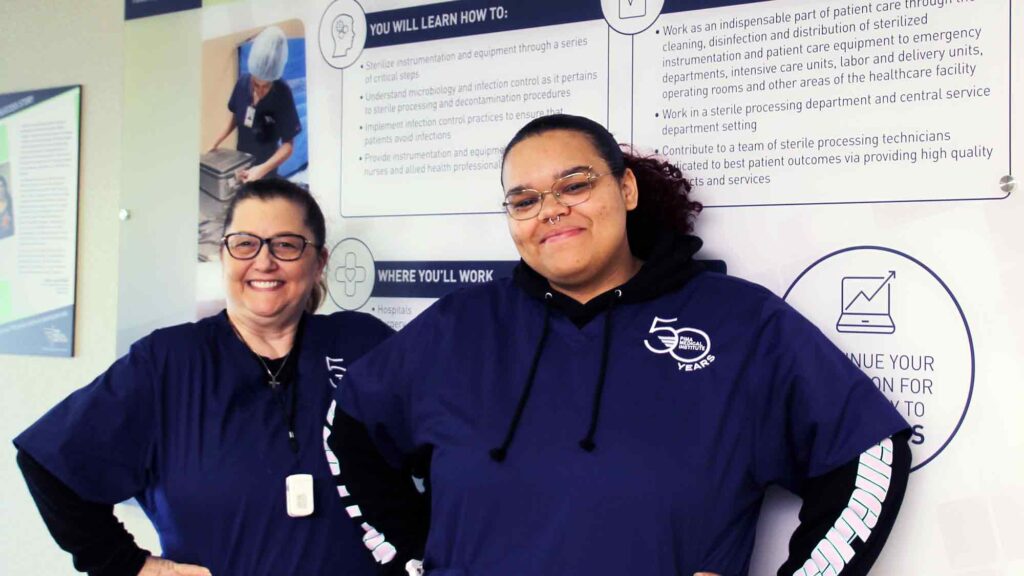
Pima Medical Institute and Banner Health Partner to bring Career Pathway Program to Current Workforce
Late last year, Pima Medical Institute and Banner Health entered into a partnership aimed at assisting current employees to advance their careers within the Banner…
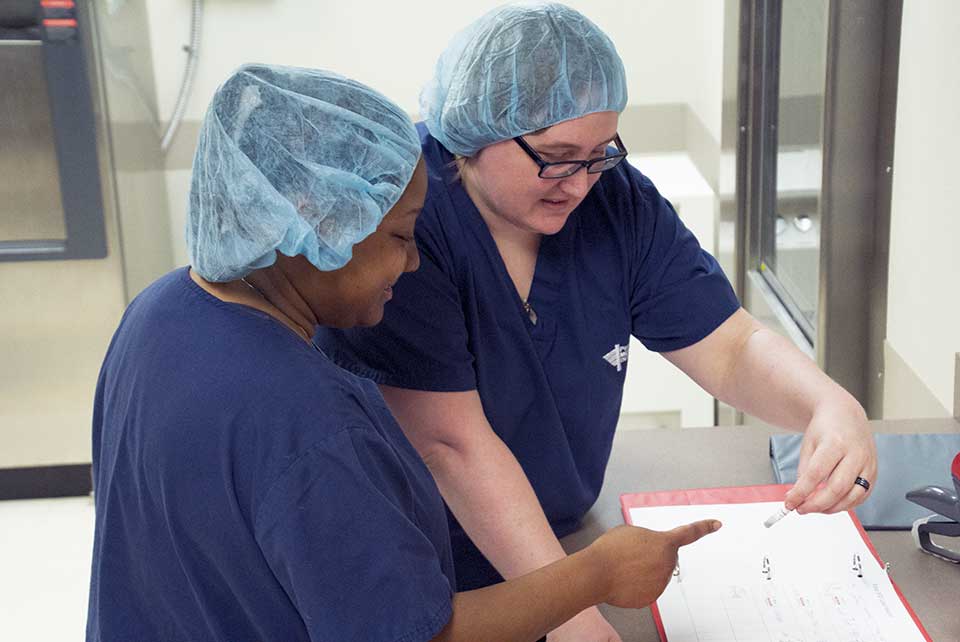
The Sterile Processing Technician – Questions and Answers About the Career and Program
Why is sterile processing important? What is the difference between a sterile processing technician and a surgical technologist? What is the average salary for a…
Accreditations and Disclosures
State Licensure Determination Disclosure
The Sterile Processing Technician program is available to residents of Arizona and Colorado, states that do not require licensure or certification to obtain employment in the field. Graduates of this program are eligible to apply to take the CRCST Credentialing Examination.
The SPT program is offered via on-ground and hybrid delivery methods. While there may be online components, completion of this program requires on-ground attendance at the campus at which the student is enrolled and cannot be completed solely via distance education. Prospective students and enrolled students should understand that moving out of the state in which they enrolled may adversely impact a student’s ability to complete the program. If a student is planning to relocate outside of their state of enrollment he or she is required to discuss this with the Student Services Coordinator and/or Program Director.
In compliance with 34 CFR 668.43 Pima Medical Institute has made a reasonable effort to determine graduate eligibility for licensure in all states for programs designed and advertised as leading to licensure. The document below lists Pima Medical Institute programs and states where the curriculum meets licensure requirements, states where the curriculum does not meet licensure requirements, and states in which Pima Medical Institute has been unable to determine if the curriculum meets state licensure requirements. All consumers should be advised that due to the frequent changes to state statutes, rules, and regulations Pima Medical Institute cannot guarantee licensure based on the lists below.
State Licensure Determination Disclosure – Certificate Programs
Licensing Board Contact Information – Sterile Processing Technician