Home / On Campus Programs / Nursing
Nursing Associate Degree Program
ABHES Accredited
On Campus
At a Glance
~20 months
Course length
70
Total credits
320
lab hours
764
class hours
528
externship hours
About the Nursing Associate Program
This associate degree in nursing (ADN) program prepares you for an entry-level career as a Registered Nurse (RN) at our Mesa or Tucson, Arizona campuses. Combining classroom instruction with extensive hands-on lab practice and real clinical experience, you’ll build the skills to provide patient care across every stage of life over approximately 20 months, from foundational nursing concepts in your first semester to acute and complex patient care in your last. When you complete the program, you’ll be eligible to apply to take the NCLEX-RN and pursue licensure as a registered nurse.
Where the Nursing Associate Degree Program Can Take You
Licensure
Graduates are eligible to apply to sit for the National Council Licensure Examination (NCLEX-RN), administered by the State Board of Nursing.*
Entry-level roles
Registered nurse, med-surg nurse, telemetry nurse, ICU nurse, ER nurse or long-term care nurse.
Career advancement
With experience, RNs can move into charge nurse, nurse manager or clinical specialist roles, or pursue additional certifications in areas such as critical care, oncology, or pediatrics.
Core Skills You’ll Develop
PATIENT CARE
PHARMACOLOGY
Pharmacology and drug calculations
NURSING
ACUTE CARE
Acute and complex patient care
INFORMATICS
Program Objective
To develop in students the intrapersonal and professional skills needed to perform as competent entry-level nurses through didactic instruction, hands-on laboratory practice, and clinical experiences. Among the topics covered in the curriculum are anatomy and physiology, growth and development, pharmacology, nursing theory, skills for patient care across the lifespan, and other topics necessary for students to acquire the knowledge and skills they need to perform as effective members of the nursing team.
Graduates of this program earn an Associate of Applied Science Degree. Graduates of approved nursing programs are eligible to apply to take the National Council Licensure Examination (NCLEX RN®). Those who pass the NCLEX-RN® are qualified to apply for state licensure or registration to practice nursing.
Find a Campus Near You
Clinical Externships
At Pima Medical Institute, most programs allow students to work in their field through clinical externships—a chance to be mentored by full-time professionals and interface with real patients.
In addition to real-world experience, clinical externships offer students resume-worthy opportunities, letters of recommendation from supervisors and sometimes job placement directly after graduation.
Learn More About Externships→Continuing Education
Graduates of the Nursing associate degree program may be eligible to enroll in the online Bachelor of Science in Nursing (RN to BSN) program at Pima Medical Institute. This advanced degree can open additional job opportunities in specialized nursing settings.
Interested in pursuing a broader healthcare management degree? At Pima Medical Institute, we offer an online Bachelor of Science in Health Care Administration.
Job Outlook
What careers can you pursue with a Nursing associate degree?
This associate degree program prepares you to pursue roles such as:
- Staff Nurse
- Charge Nurse
- Emergency Room Nurse
- Intensive Care Unit (ICU) Nurse
- Pediatric Nurse
- Home Health Nurse
- School Nurse
- Long-Term Care Nurse
These roles exist across a variety of environments, including hospitals, healthcare facilities, community health organizations, schools, long-term care facilities, in-home health, physicians’ offices and outpatient clinics.
Career Services
When you’re a Pima Medical Institute student, you get access to our Career Services team—here for you when you need extra help with finding the right job opportunities, building a resume, strengthening your interview skills or just looking for general guidance.
View Career Services→Student Services
Our team of student service professionals are on hand to see students through the challenges they might face during their academic career. We offer guidance and resources to ultimately help build employable medical professionals.
View Student Services→Application Process
- Submit the form below
A few quick details so we can get to know you before we connect.
- Chat with our team
They’ll ask about your goals, your background, and what’s drawing you to healthcare. From there, they’ll help you find the right program and campus for where you are in life right now.
- Attend your campus tour
Experience Pima Medical in person and picture yourself in a career that matters. We’ll walk you through programs and what to expect.
- We help you complete your application
Our team guides you through every step, including enrollment and financial services, so nothing stands between you and getting started.
Nursing Associate Degree Program Eligibility Requirements
- Possess a high school diploma or recognized equivalency
- Additional requirements may apply by campus

Tuition & financial aid
Federal aid (FAFSA), institutional scholarships and payment plans are available for those who qualify to help make your education affordable.
FAQs About our Nursing Program
What does a nurse do?
What will I learn in this program?
How do I get certified as a nurse after graduation?
Successfully completing this program makes you eligible to apply to take the National Council Licensure Examination (NCLEX-RN), administered by your State Board of Nursing. Those who pass the NCLEX-RN are qualified to apply for state licensure or registration to practice nursing.
How does Pima Medical prepare me for the NCLEX-RN exam?
What happens if I don't pass the NCLEX-RN on my first attempt?
Can I enter the program if I'm already a Licensed Practical Nurse (LPN)?
Is there a clinical component to this program?
Can I work while completing this program?
Is this program accredited?
Pima Medical Institute is institutionally accredited by the Accrediting Bureau of Health Education Schools (ABHES). The Associate Degree Nursing program is approved by the Arizona State Board of Nursing, and graduates are eligible to sit for the NCLEX-RN exam.
Is financial aid available?
Eligible students may be able to fund their education through federal financial aid programs, including Federal Pell Grants, federal student loans and scholarships. Speak with our financial services team or visit our Financial Aid page to learn more.
Program Outline
Learn more about the courses in this program.
Semester l
Semester II
Semester III
Semester IV
Semester V
Nobody Says It Better Than Our Students
Read our reviews from students and alumni to find out for yourself…
Pima Medical Blog
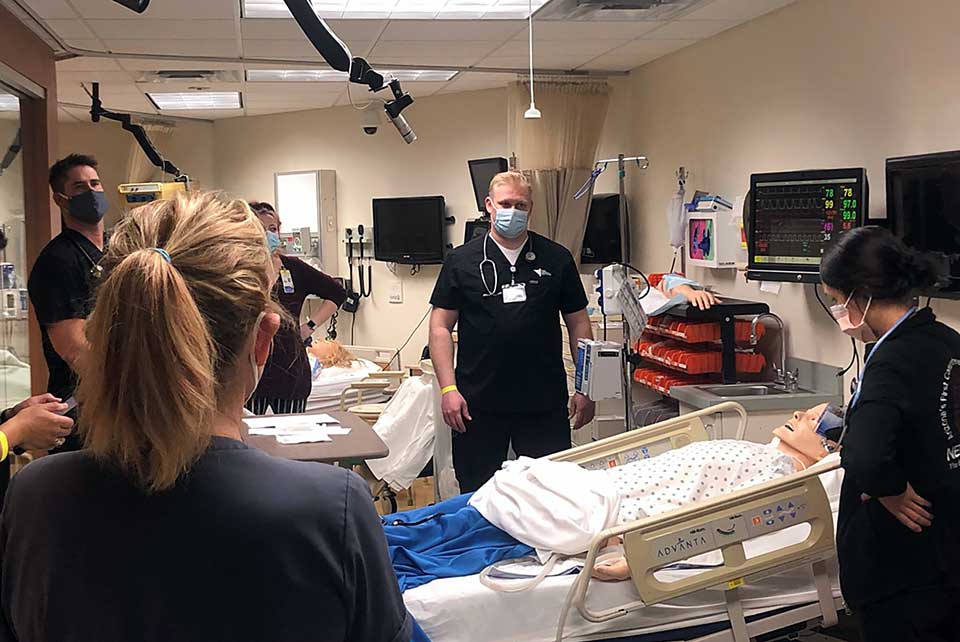
You Need Soft Skills as well as Technical Skills to be a Successful Nurse
A nurse is at the core of any medical team. Working directly with patients, nurses need a strong educational background and to be skilled at…
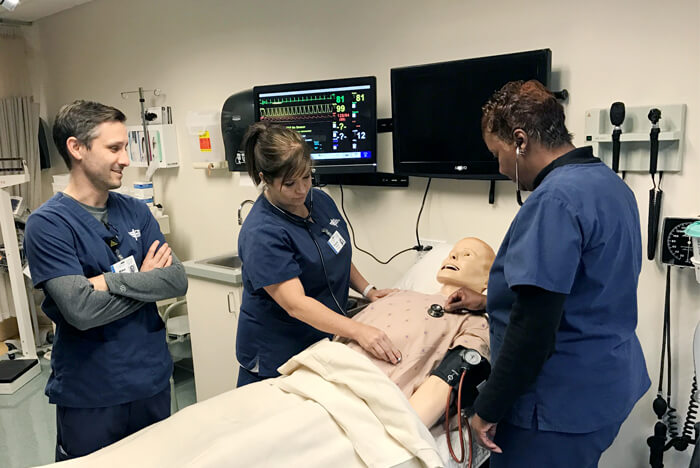
What Kind of Nurse do you Want to Be?
The great thing about a nursing career is its variety. Nurses may work in traditional settings, such as the hospital or doctor’s office, but they…

What It Takes to Become a Pediatric Nurse: CNA to RN
Hear From Teri Gearon, RN, Nursing Faculty, Pima Medical Institute The best pediatric nurses know medicine is only half the job; the rest is trust,…
Accreditations and Disclosures
Accreditation and Program Information
The Associate Degree Nursing Program at Pima Medical Institute Tucson Campus has been granted full approval for a Nursing Program by the Arizona Board of Nursing. Graduates of Pima Medical Institute’s Associate Degree Nursing Program are eligible to take the NCLEX-RN Exam.
The Associate Degree Nursing program at Pima Medical Institute Mesa Campus has been granted full approval for a Nursing Program by the Arizona Board of Nursing. Graduates of Pima Medical Institute’s Associate Degree Nursing program are eligible to take the NCLEX-RN® Exam.
The Associate Degree Nursing Program does not currently have programmatic accreditation. The lack of national nursing accreditation may limit future educational and career options for students.
View accreditation information for all programs by campus
Mesa Nursing Program Prospective Student Handout
Tucson Nursing Program Prospective Student Handout
View program costs, additional disclosures and outcomes for this program (if applicable)
State Licensure Determination Disclosure
The Associate Degree Nursing program is offered via on-ground and hybrid delivery methods. The program is available to residents of Arizona and is approved for licensure by the Arizona State Board of Nursing. While there may be online components, completion of this program requires on-ground attendance at the campus at which the student is enrolled and cannot be completed solely via distance education. Prospective students and enrolled students should understand that moving out of the state may adversely impact a student’s ability to complete the program. If a student is planning to relocate out of the state he or she is required to discuss this with the Student Services Coordinator and/or Program Director.
After licensure is obtained in Arizona, transfer of state licensure may be available via state reciprocity compacts. Prospective students and current students are strongly encouraged to contact the state professional licensing board or similar regulatory body in the state(s) where they plan to work to determine requirements before enrolling in a program.
In compliance with 34 CFR 668.43 Pima Medical Institute has made a reasonable effort to determine graduate eligibility for licensure in all states for programs designed and advertised as leading to licensure. The document below lists states where the curriculum meets licensure requirements, states where the curriculum does not meet licensure requirements, and states in which Pima Medical Institute has been unable to determine if the curriculum meets state licensure requirements. All consumers should be advised that due to the frequent changes to state statutes, rules, and regulations Pima Medical Institute cannot guarantee licensure based on the lists below.
State Licensure Determination Disclosure – Nursing Programs
Contact information for state licensing boards in which Pima Medical Institute has determined the program does not meet state licensure requirements or where Pima Medical Institute has been unable to determine if the program meets state licensure requirements can be found below.