 If you live anywhere in the greater Seattle area and have been considering a career change, you just graduated high school or are interested in a health care career, medical assisting is a career worth considering. Medical assisting is one of the most accessible entry points into health care, and in less than a year you can be trained and working in the field.
Pima Medical Institute has two campuses serving the Puget Sound region. The Renton campus has been training students in If you live anywhere in the greater Seattle area and have been considering a career change, you just graduated high school or are interested in a health care career, medical assisting is a career worth considering. Medical assisting is one of the most accessible entry points into health care, and in less than a year you can be trained and working in the field.
Pima Medical Institute has two campuses serving the Puget Sound region. The Renton campus has been training students in South King County since 2004, and the Seattle campus has been operating in Northgate since 1989. Both offer the same Medical Assistant certificate program and are designed to take you from zero health care background to job-ready in approximately nine months.
This certificate program is much different than a four-year degree. It is focused, career-oriented training that provides you with the hands-on skills and knowledge to pursue your career.
What the Medical Assistant Program Actually Covers
The Medical Assistant certificate program at Pima Medical Institute trains you to handle both the front and back of a medical office. That means you will learn clinical skills (the hands-on patient care side) and administrative skills (the office management and billing side), which makes you a more versatile hire.
Here is what the curriculum covers over the course of just nine months:
- Anatomy, physiology, and medical terminology, so when you hear a physician say “tachycardia”
- or “hypertension,” you know exactly what they mean and how to document it
- Medical office procedures, including scheduling, billing, coding, and insurance processing
- Clinical examination techniques and how to assist physicians during exams and minor procedures
- Phlebotomy and lab work, including drawing blood, handling specimens, and running basic diagnostic tests
- Pharmacology, so you understand the medications patients are taking, how they work, and how to educate patients about proper use
- Medical law and ethics, covering patient privacy, informed consent, and the legal side of working in health care
The Medical Assistant certificate program also includes a clinical externship, providing you with real-world, hands-on experience and skills. Everything you learn in this program is built around what employers in the Seattle area are actually looking for when they hire medical assistants.
Your Externship: Working in a Real Seattle Clinic
This is where the program allows you to put what you have learned into practice. In your final weeks, you will be placed in a real medical office, clinic, or hospital in the greater Seattle area, working under the supervision of licensed professionals.
You will have the opportunity to gain experience in a family practice in Renton near Valley Medical Center, a pediatric clinic on the Eastside in Bellevue or Kirkland, a specialty practice in North Seattle, or even a hospital-based clinic serving patients across King County. The externship is tailored to your location and the types of settings available through Pima Medical Institute’s network of clinical partners.
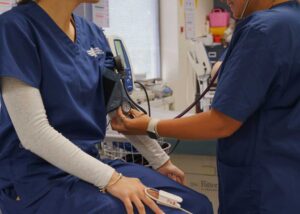
This allows you to get experience in a real-world job setting. You are taking vitals, prepping patients, running labs, updating charts, and handling the day-to-day work that medical assistants are hired to do. By the time you graduate, you already have clinical experience on your resume, which makes a real difference when you start your job search.
While some students do get hired directly by their externship site, others walk away with strong letters of recommendation and connections in the local health care community. Either way, after you graduate you won’t be starting your career from scratch.
Hybrid Options for Students Who Need Flexibility
If you are working full time, managing family responsibilities, or commuting from outside the immediate Seattle area, Pima Medical Institute offers a hybrid learning option at select campuses.
In the hybrid format, in-person instruction takes place two days a week with online learning three days a week. Foundational lecture content is completed online, while labs and clinical skills training takes place on campus. It gives you more control over your time without sacrificing the in-person training that employers expect. The Medical Assistant certificate program is offered in the hybrid format option at the Renton and Seattle campuses. However, your externship is always completed in person, no matter which format you choose.
Where You Will Work After Graduation
Seattle’s health care sector is massive. Between Swedish Health Services, UW Medicine, Providence, Virginia Mason, MultiCare, EvergreenHealth, and Overlake Medical Center, there are thousands of medical assistant job opportunities across the metro area.
You could end up working in a small family practice in South Seattle, a busy urgent care center in Ballard, a specialty clinic in Redmond, or a hospital system with locations across King and Pierce counties. The breadth of the market means you are not stuck applying to one or two employers. You have real options.
And because both of the campuses offered in the greater Seattle area are located near major health systems, your externship placements can often lead directly to job opportunities within those same networks.
Getting Certified After You Graduate
Washington does not require medical assistants to be licensed, but most employers strongly prefer or require national certification. The two most common credentials are the following:
- Certified Medical Assistant (CMA) through the American Association of Medical Assistants (AAMA)
- Registered Medical Assistant (RMA) through American Medical Technologists (AMT)
Graduates of the Medical Assistant certification program will be eligible to apply to sit for CMA, RMA and the NHA-CCMA certification exams.* Certification is not legally required to work, but through coursework and content woven into the curriculum, graduates will be eligible to sit for these exams. Certified medical assistants often qualify for higher starting pay and have an easier time moving between employers or advancing into supervisory roles later on.
*Certification and state registration requirements vary.
What a Medical Assistant Program Costs
The total program cost for the Medical Assistant certificate program at Pima Medical Institute’s Seattle campus is $19,997 which includes tuition, textbooks, lab supplies, technology fees and clinical materials.*
*For the most current tuition cost, go to the Seattle addenda in the Academic Catalog.
If that number feels steep, applying for financial aid is an option. Eligible students can apply for Federal Pell Grants, federal student loans, and scholarships. The financial services team will walk you through what you qualify for and what your actual out-of-pocket expense will be after aid.
The Job Market for Medical Assistants
Nationally, the outlook is strong. According to the U.S. Bureau of Labor Statistics, employment of medical assistants is projected to grow 12 percent from 2024 to 2034, with about 112,300 openings expected each year. The median annual wage is $44,200*, though that figure can be higher in metro areas like Seattle, where the cost of living drives up compensation.
*Bureau of Labor Statistics, U.S. Department of Labor, Occupational Outlook Handbook, Medical Assistants, at https://www.bls.gov/ooh/healthcare/medical-assistants.htm (visited July 27, 2026).
What makes Seattle particularly appealing for medical assistants is the sheer size and diversity of the health care sector. Between the major systems, specialty clinics, outpatient facilities, and private practices, there are jobs at every experience level, and employers are often hiring.
Is This the Right Fit for You?
Pima Medical Institute’s Medical Assistant program is a good fit for you if you…
- Want to break into health care without committing to a four-year degree
- Need a program you can finish in under a year while still getting real clinical training
- Are juggling work or family and need flexible scheduling through the option of hybrid learning
- Want to stay local and build your career in the Seattle metro area
- Are looking for a role that mixes patient interaction with behind-the-scenes office work
This is also a solid option if you have been working in retail, food service, or another industry and you are ready to pursue a new career. This program does not assume you have any prior health care knowledge. You start from the beginning, and the externship gives you the real-world experience employers want to see.
Next Steps
Classes at Pima Medical’s Renton and Seattle campuses start regularly throughout the year. To find out more, tour a campus, or talk through your financial aid options, visit the Medical Assistant certificate program page or call 1-800-477-PIMA.
Program costs are based on current published figures and may vary based on taxes. Contact your local Pima Medical campus for the most current pricing and financial aid options.