Home / On Campus Programs / Paramedic
Paramedic Associate Degree Program
CAAHEP Accredited
On Campus | Hybrid*
At a Glance
~15 Months
Course length
60.5
Total credits
135.5
Lab hours
641
Class hours
650
Externship hours
About the Paramedic Associate Degree Program
This paramedic program is designed for current, certified EMTs and AEMTs ready to advance to the next level of prehospital care. Over approximately 15 months at our Las Vegas campus, you’ll build on the emergency medical foundation you already have, training for the advanced, high-stakes situations paramedics handle every day.
Where the Paramedic Associate Degree Program Can Take You
Certification
Graduates are eligible to apply to sit for certification through the National Registry of Emergency Medical Technicians (NREMT) at the paramedic level.*
Entry-level roles
Paramedic, flight paramedic, industrial paramedic, wildland fire paramedic, or critical care paramedic.
Career advancement
This associate degree gives you the hands-on experience that matters for leadership roles. From there, a bachelor's degree can open the door to EMS management or supervisory positions.
Core Skills You’ll Develop
CARDIOLOGY
Advanced cardiology and ECG interpretation
TRAUMA
Trauma and pediatric emergency response
LIFE SUPPORT
ASSESSMENT
Patient assessment and diagnostics
Program Objective
To develop in students the intrapersonal and professional skills needed to perform as competent entry-level paramedics through didactic instruction, hands-on laboratory practice, and clinical experiences. Among the topics covered in the curriculum are anatomy and physiology, patient assessment, airway management, pharmacology, medical emergencies, pediatric emergencies, cardiology, trauma, and other topics necessary to be effective members of the emergency services team.
Graduates of the program earn an Associate of Occupational Science Degree. After successful completion of all didactic and clinical hours, students will be required to obtain a provisional license from the Southern Nevada Health District (SNHD) or other regulatory agency prior to beginning EMS 242 Field Internship. The provisional license requires that the applicant successfully pass a licensure examination. Total hours required to complete EMS 242 Field Internship may vary depending upon assigned schedule; as a result, the length of the program may be extended. Graduates of the Paramedic program are eligible to apply to take the NREMT certification examination at the paramedic level.
Hybrid Learning Options
For students who need more flexibility in their schedules, hybrid learning options are available at select campuses. Hybrid learning combines in-person instruction with online learning. Students can engage with course materials at times and in environments that suit their individual circumstances, such as balancing employment, family responsibilities or geographic constraints. However, externship hours must be completed entirely in person because hands-on clinical experience is essential for developing the practical skills and confidence needed for real-world patient care.
*Not all programs offer hybrid learning options; Hybrid education options not available at all campuses

Find a Campus Near You
Clinical Externships
At Pima Medical Institute, most programs allow students to work in their field through clinical externships—a chance to be mentored by full-time professionals and interface with real patients.
In addition to real-world experience, clinical externships offer students resume-worthy opportunities, letters of recommendation from supervisors and sometimes job placement directly after graduation.
Learn More About Externships→Continuing Education
Job Outlook
6% Growth — The Bureau of Labor Statistics projects this occupation to grow faster than average over the next 10 years with a median pay of $60,600 per year.*
What careers can you pursue with a Paramedic Associate Degree Program?
The Paramedic program prepares students to apply for roles and other related career opportunities including:
- Paramedic
- Flight Paramedic
These careers exist in a variety of environments, including but not limited to ambulance services, hospitals, industrial plants, forest services and fire departments.
Career Services
When you’re a Pima Medical Institute student, you get access to our Career Services team—here for you when you need extra help with finding the right job opportunities, building a resume, strengthening your interview skills or just looking for general guidance.
View Career Services→Student Services
Our team of student service professionals are on hand to see students through the challenges they might face during their academic career. We offer guidance and resources to ultimately help build employable medical professionals.
View Student Services→Application Process
- Submit the form below
A few quick details so we can get to know you before we connect.
- Chat with our team
They’ll ask about your goals, your background, and what’s drawing you to healthcare. From there, they’ll help you find the right program and campus for where you are in life right now.
- Attend your campus tour
Experience Pima Medical in person and picture yourself in a career that matters. We’ll walk you through programs and what to expect.
- We help you complete your application
Our team guides you through every step, including enrollment and financial services, so nothing stands between you and getting started.
Paramedic Program Eligibility Requirements
- Possess a high school diploma or recognized equivalency
- Provide proof of current EMT or AEMT certification, evidenced by current NREMT certification, an SNHD Attendant License or certificate, or another form of EMT certification approved by the Program Director
Partway through the program, you’ll also need to obtain a provisional license from the Southern Nevada Health District (SNHD), which requires passing a licensure examination, before beginning EMS 242 Field Internship in your final semester.
Additional requirements may apply by campus
Tuition & financial aid
Federal aid (FAFSA), institutional scholarships and payment plans are available for those who qualify to help make your education affordable.
FAQs About our Paramedic Program
What is a paramedic?
What does a paramedic do day to day?
Can I apply if I'm not yet an EMT or AEMT?
Do I need to pass an exam partway through this program?
What will I learn in this program?
Is there a clinical component to this program?
How do I get certified as a paramedic after graduation?
How does Pima Medical prepare me for the NREMT exam?
Is this program accredited?
Is financial aid available?
Program Outline
Learn more about the courses in this program.
Program Outline for Las Vegas
Semester l
Semester lI
Semester III
Semester IV
Nobody Says It Better Than Our Students
Read our reviews from students and alumni to find out for yourself…
Pima Medical Blog
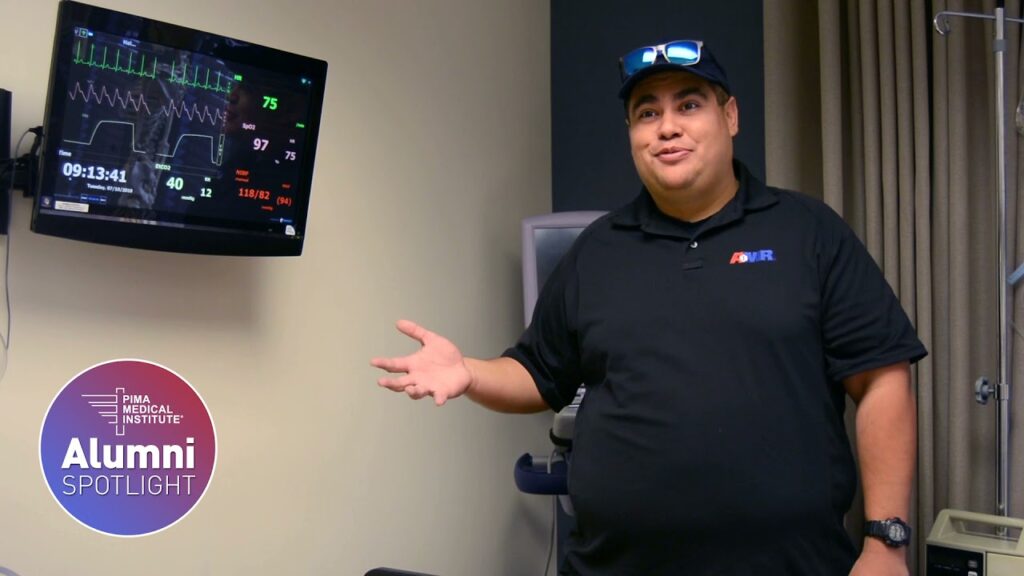
Alumni Spotlight: Paramedic Graduate Roberto Aranda
Ready to grow his career, Roberto decided to enroll in the Paramedic program at our Mesa campus (program now only offered at our Las Vegas…
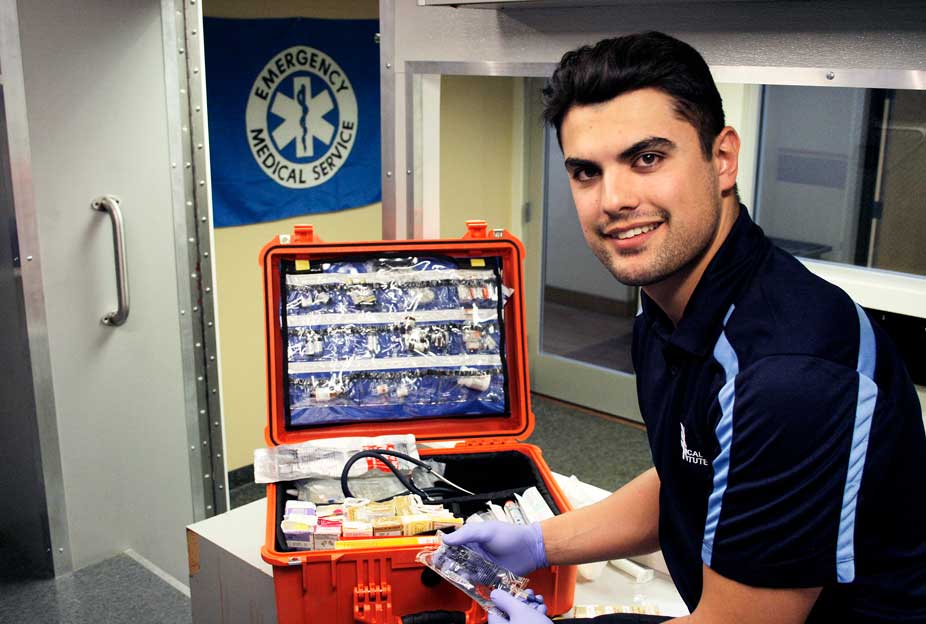
3 Reasons to Consider Becoming a Paramedic
Are you ready to take the lead in the emergency medical services (EMS) field? At Pima Medical Institute, our Paramedic associate degree program is designed…
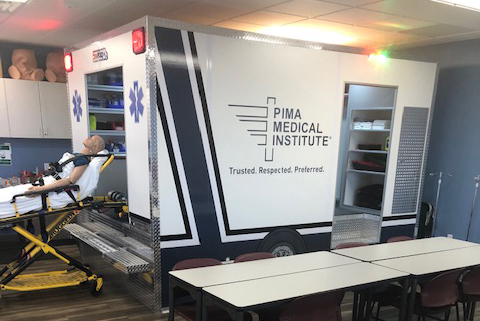
Pima Medical Institute Launches Paramedic Associate Degree Program in Las Vegas
Students interested in pursuing a career as a paramedic can now enroll in an associate degree program at Pima Medical Institute’s Las Vegas campus. Pima…
Accreditations and Disclosures
Accreditation and Program Information
The Paramedic program of Pima Medical Institute Las Vegas Campus is accredited by the Commission on Accreditation of Allied Health Education Programs (www.caahep.org) upon the recommendation of the Committee on Accreditation of Educational Programs for the Emergency Medical Services Professions (CoAEMSP).
View accreditation information for all programs by campus
View program costs, additional disclosures and outcomes for this program (if applicable)
State Licensure Determination Disclosure
The Paramedic program is offered via on-ground and hybrid delivery methods. The program is available to residents of Nevada and meets applicable licensure requirements in those states. While there may be online components, completion of this program requires on-ground attendance at the campus at which the student is enrolled and cannot be completed solely via distance education. Prospective students and enrolled students should understand that moving out of the state in which they enrolled may adversely impact a student’s ability to complete the program. If a student is planning to relocate outside of their state of enrollment he or she is required to discuss this with the Student Services Coordinator and/or Program Director.
Graduates of the Paramedic program are eligible to apply to take the National Registry of Emergency Medical Technicians (NREMT) certification examination at the paramedic level. After licensure is obtained in the state (NV) transfer of state licensure may be available via state reciprocity compacts. Prospective students and current students are strongly encouraged to contact the state professional licensing board or similar regulatory body in the state(s) where they plan to work to determine requirements before enrolling in a program.
In compliance with 34 CFR 668.43 Pima Medical Institute has made a reasonable effort to determine graduate eligibility for licensure in all states for programs designed and advertised as leading to licensure. The document below lists Pima Medical Institute programs and states where the curriculum meets licensure requirements, states where the curriculum does not meet licensure requirements, and states in which Pima Medical Institute has been unable to determine if the curriculum meets state licensure requirements. All consumers should be advised that due to the frequent changes to state statutes, rules, and regulations Pima Medical Institute cannot guarantee licensure based on the lists below.
State Licensure Determination Disclosure – Associate Degree
Contact information for state licensing boards in which Pima Medical Institute has determined the program does not meet state licensure requirements or where Pima Medical Institute has been unable to determine if the program meets state licensure requirements can be found below.