Home / Online Programs / B.S. Radiologic Sciences
Radiologic Sciences Bachelor's Degree Program - Online
Classes Start January 6
Build on your imaging credentials with a bachelor’s degree you can complete in as few as 16 months.
At a Glance
~16-Month
Program Length
100% Online
Format
70*
Transfer Credits Required
50
Remaining Semester Credits
*Requires 15 general education, 46 radiology technical and 9 related credits
About Our Online Bachelor of Science in Radiologic Sciences Program
This degree completion program is built for current medical imaging and radiation therapy professionals who want to build on the credential they already hold. In approximately 16 months, you’ll complete coursework in advanced imaging concepts, leadership and healthcare systems, delivered entirely online and asynchronously so you can keep working in your current role while you study.
Core Skills You’ll Develop
LEADERSHIP
Healthcare management and professional leadership
RESEARCH
Evidence-based practice and critical thinking
COMPLIANCE
Healthcare law, compliance, quality management and patient information systems
CLINICAL
Advanced sectional anatomy, imaging modalities and patient assessment
AREA OF EMPHASIS
Choose from Management in Medical Imaging or Education for Allied Health Professionals in your third semester
Where the Bachelor of Science in Radiologic Sciences Program Can Take You
Build skills that can help prepare you for supervisory, management or department-level responsibilities within medical imaging and healthcare.
Pursue new roles beyond the technical side of imaging, such as operations, instructor positions, quality, medical sales and applications support.
Build a foundation toward advanced graduate study in radiography, leadership, education or other areas of healthcare.
Program Objective
To prepare graduates for employment responsibilities where knowledge and skills beyond those typically attained at the associate degree level are required or preferred, with emphasis on developing professional leadership skills, applying critical thinking skills, and acquiring advanced knowledge of health care systems. General education content gives students the opportunity to explore and integrate information beyond the specific focus of their major and to build a foundation for lifelong learning. The program is based upon the core curriculum guidelines of the American Society of Radiologic Technologists (ASRT), which recognizes the baccalaureate degree as the professional level of radiologic science education.
Program Outline
Semester I
Semester II
Semester III
Semester IV
Continue Your Radiologic Sciences Education
Ready to keep building your career? Take your education further with Pima Medical Institute’s online Master of Science in Organizational Leadership. Build on your bachelor’s degree while developing advanced leadership, communication and organizational skills that can support continued growth in health care and beyond.
Job Outlook
5% Growth — The Bureau of Labor Statistics projects this occupation to grow faster than average over the next 10 years, with a median pay of $81,390 per year.*
*Source: Bureau of Labor Statistics, U.S. Department of Labor, Occupational Outlook Handbook, Radiologic Technologists and Technicians, https://www.bls.gov/ooh/healthcare/radiologic-technologists.htm (visited August 28, 2026).
What careers can you pursue with a radiologic sciences bachelor's degree?
The Bachelor of Science in Radiologic Sciences program prepares students to apply for roles including:
- Instructor and Clinical Instructor positions
- Supervisor or Radiology Department Manager roles
- Healthcare Sales or Marketing Representative positions
- Quality Improvement Coordinator roles
- Further advanced education
Student Support
Career Services
When you’re a Pima Medical Institute student, you get access to our Career Services team—here for you when you need extra help with finding the right job opportunities, building a resume, strengthening your interview skills or just looking for general guidance.
Life as an Online Student
When you’re an online student at Pima Medical Institute, you’re part of a supportive learning environment built to help you stay connected and on track. Learn what to expect from online classes, how you’ll engage with instructors and classmates and the resources available throughout your program.
Admissions & Application
Application Process
- Submit the form below
Share a few details so we can prepare for our first conversation.
- Chat with our team
They’ll ask about your background and what you’re looking for in your next step. From there, they’ll help you explore whether the program and online learning experience fit your career goals.
- Attend your virtual tourGet an overview of the program, curriculum, and what to expect as an online student.
- Complete your applicationOur admissions team will walk you through the enrollment process and connect you with financial services.
Bachelor of Science in Radiologic Sciences Eligibility Requirements
This is a degree completion program. In addition to Pima Medical Institute’s standard admissions requirements, applicants must:
- Hold and maintain current certification from one of the following: the American Registry of Radiologic Technologists (ARRT), the American Registry for Diagnostic Medical Sonography (ARDMS), or the Nuclear Medicine Technology Certification Board (NMTCB)
- Have graduated within the past five years, or be able to provide evidence of recent practice in a relevant medical imaging vocation
- Have completed 70 semester credits of specific coursework at the postsecondary level: 15 general education credits, 46 radiology technical credits, and 9 related credits
- Have earned a grade of C or better in each transfer course, with each course numbered 100 or above and awarded by a nationally or regionally accredited institution
- Have general education transfer credits drawn from a broad sampling of educational experiences, such as arts and humanities, business, information systems, social sciences, or natural sciences

Tuition & financial aid
Federal aid (FAFSA), institutional scholarships, and payment plans are available for those who qualify to help make your education affordable.
View program costs, additional disclosures and outcomes for this program (if applicable)→
Nobody Says It Better Than Our Students
Read our reviews from students and alumni to find out for yourself…
FAQs About Our Bachelor of Science in Radiologic Sciences Program
Is this an entry-level program for someone new to medical imaging?
No. The BSRS is a degree completion program designed specifically for current medical imaging and radiation therapy professionals. Applicants must already hold a professional credential to be admitted. If you’re looking to enter a medical imaging profession for the first time, Pima Medical offers an on-campus Radiography associate degree at multiple campuses.
What credentials are accepted for admission?
You’ll need to hold and maintain current certification from one of the following:
- American Registry of Radiologic Technologists (ARRT)
- American Registry for Diagnostic Medical Sonography (ARDMS)
- Nuclear Medicine Technology Certification Board (NMTCB)
You’ll also need to have graduated within the past five years or be able to show evidence of recent practice in a relevant medical imaging vocation, along with meeting the transfer credit requirements below.
What are the transfer credit requirements?
Is this program 100% online, and how long does it take?
Are there specific software or computer requirements?
Students typically need a full PC or Mac with the Microsoft Office suite. Tablets or Chromebooks are often insufficient to complete the coursework required in the BSRS curriculum. For more details please visit Life as an Online Student
Is the program aligned with ASRT guidelines?
Yes. The curriculum is based on the core curriculum guidelines established by the American Society of Radiologic Technologists (ASRT).
Can I choose the focus of my degree?
What's the difference between the Management and Education tracks?
The Management track (RA 450) covers the operational and leadership skills needed to run a medical imaging department, including resource management, workflow efficiency and navigating emerging imaging technologies. The Education track (EDU 450) covers educational theory and adult learning principles, preparing you to teach in settings like patient and community education, staff development, or clinical and academic instruction. Choose Management if you’re aiming for a department leadership role, or Education if you’re interested in teaching future imaging professionals.
What will I learn in the BSRS program?
What does the Professional Capstone involve?
Is a bachelor's degree in Radiologic Sciences worth it?
Who is the Bachelor of Science in Radiologic Sciences program for?
Is Pima Medical Institute accredited?
Yes. Pima Medical Institute is institutionally accredited by the Accrediting Bureau of Health Education Schools (ABHES), which is recognized by the U.S. Secretary of Education for accrediting private, postsecondary institutions offering predominantly allied health education programs.
Can I enroll in this program from anywhere in the United States?
Is financial aid available?
Eligible students may be able to fund their education through federal financial aid programs, including Federal Pell Grants, federal student loans and scholarships. Speak with our financial services team or visit our Financial Aid page to learn more.
Related Resources

Nicole Cardenas, Radiologic Technologist, Department of Veterans Affairs – Albuquerque
Nicole Cardenas is a graduate of the Albuquerque Campus Radiography associate degree program and a graduate of the online Bachelor of Science in Radiologic Sciences…

Michael Reyna, Clinical Coordinator
Michael Reyna is a 2012 graduate of the online Bachelor of Science in Radiologic Sciences program. How did you learn about Pima Medical Institute? With…
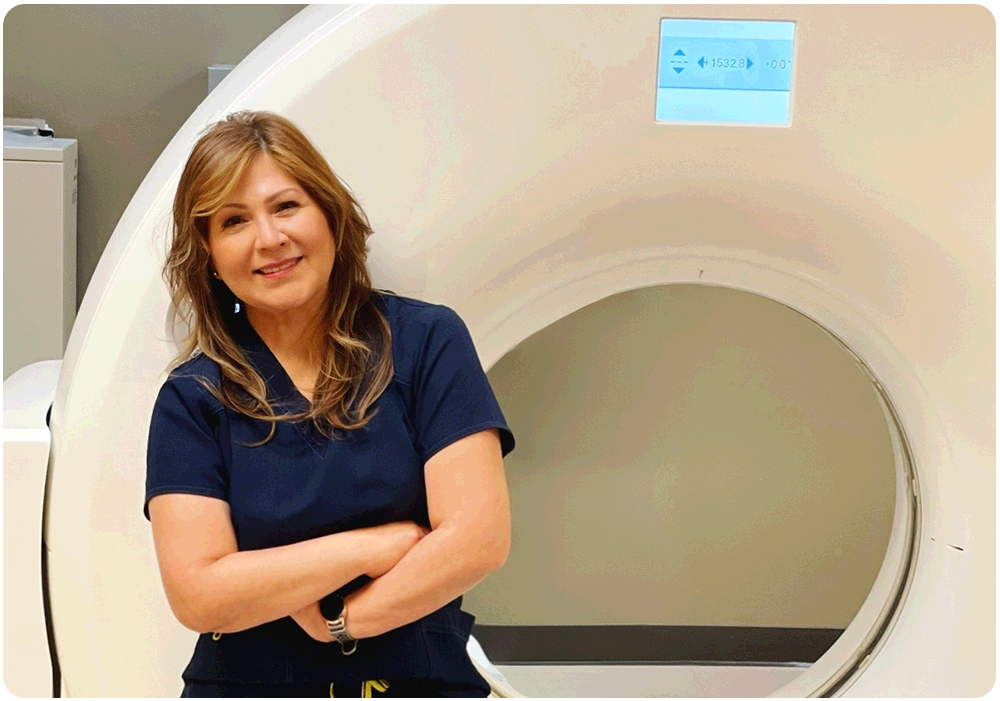
Is a Bachelor of Science in Radiologic Sciences Worth It? A Deep Dive into Pima Medical Institute’s BSRS Program
Taking a Closer Look at the Online BSRS Program Already a credentialed radiographer or medical imaging professional? In this episode, we break down everything you…
Accreditations and Disclosures
State Licensure Determination Disclosure
The Bachelor of Science in Radiologic Sciences program is offered via an online delivery method. Pima Medical Institute is an approved institution through the National Council for State Authorization Reciprocity Agreement (NC SARA) which allows Pima Medical Institute Tucson to offer distance learning programs to residents of states other than Arizona. Participation in NC SARA does not exempt an institution from state professional licensing requirements.
A student’s physical location is determined at the time of enrollment by submission of government-issued identification as well as a student attestation of their physical location in the enrollment agreement. Students agree to update the institution if their physical location changes. Students are able to notify the institution of a change to their physical location in the Pima Medical Institute Student Portal. Prospective students and enrolled students should understand that a change in physical location may adversely impact a student’s ability to complete the program. If a student is planning to relocate he or she is required to discuss this with the Student Services Coordinator and/or Program Director.
In compliance with 34 CFR 668.43 Pima Medical Institute has made a reasonable effort to determine graduate eligibility for licensure in all states for programs designed and advertised as leading to licensure. The document below lists Pima Medical Institute programs and states where the curriculum meets licensure requirements, states where the curriculum does not meet licensure requirements, and states in which Pima Medical Institute has been unable to determine if the curriculum meets state licensure requirements. All consumers should be advised that due to the frequent changes to state statutes, rules, and regulations Pima Medical Institute cannot guarantee licensure based on the lists below.