Home / On Campus Programs / Phlebotomy Technician
Phlebotomy Technician Certificate Program
Train for a Career as a Phlebotomist in Our Three-Month Certificate Program
ABHES Accredited
On Campus
At a Glance
~3 Months
Course length
70
Lab hours
70
Class hours
160
Externship hours
About the Phlebotomy Technician Program
Phlebotomy technicians are vital members of the medical laboratory and clinical team. They specialize in collecting quality blood samples from patients for diagnostic laboratory testing, transfusions, research and blood donations. Beyond technical skill, phlebotomists provide compassionate, patient-centered care that eases anxiety during medical visits.
Through hands-on laboratory training and a supervised clinical externship, Pima Medical Institute’s Phlebotomy Technician program prepares students with blood collection mastery, laboratory safety knowledge and professional confidence to launch a rewarding healthcare career.
Where the Phlebotomy Technician Program Can Take You
Certification
This program prepares graduates to apply to sit for the Certified Phlebotomy Technician (CPT) credential through the National Healthcareer Association (NHA).*
Find out more
Entry-level roles
Step into a phlebotomy technician role in hospitals, clinical labs, independent laboratories, blood donor centers or physicians' offices.
Career advancement
With experience, phlebotomy techs can advance to senior/lead phlebotomist roles, supervising blood draw teams or managing specimen processing workflows.
*Certification and state registration requirements vary.
Core Skills You’ll Develop
CLINICAL
Universal precautions, infection control and OSHA safety standards
ADMINISTRATIVE
Laboratory Information Systems (LIS) and data entry; patient confidentiality (HIPAA) and legal ethics in healthcare
COLLECTION
Venipuncture and capillary blood collection techniques and complications in phlebotomy and specialized collection protocols, including specimen handling, processing, preservation and transport
ANATOMY
LABORATORY
Introduction to laboratory operations, equipment and professional communication with patients and clinical teams
PATIENT CARE
Program Objective
Why Choose Phlebotomy?
Phlebotomists play a crucial role in diagnostic medicine, as up to 70% of medical decisions made by physicians depend on laboratory test results.
Phlebotomists often perform responsibilities such as:
- Performing venipunctures and capillary punctures safely
- Identifying patients and verifying test requisitions
- Selecting appropriate collection tubes for specific lab tests
- Labeling specimen tubes accurately at bedside/chairside
- Transporting and processing specimens per safety protocols
- Maintaining infection control and universal precautions
- Assisting patients with adverse reactions during draws
- Entering patient and specimen data into LIS
Find a Campus Near You
Pima Medical Institute has campuses across the West, each offering hands-on Phlebotomy Technician training built for immediate workforce entry.
Clinical Externships
At Pima Medical Institute, most programs allow students to work in their field through clinical externships—a chance to be mentored by full-time professionals and interface with real patients.
In addition to real-world experience, clinical externships offer students resume-worthy opportunities, letters of recommendation from supervisors and sometimes job placement directly after graduation.
Continuing Education
At Pima Medical Institute, your Phlebotomy Technician Certificate is just the beginning. You can expand your clinical skills with our Medical Assistant Certificate Program, which builds on your healthcare foundation with broader clinical and administrative training. If you are interested in healthcare administration and leadership, we also offer an online Associate Degree in Health Care Administration, an online Bachelor of Science in Health Care Administration, and an online Master of Science in Organizational Leadership. Get the skills you need to move up, with the flexibility to work on your schedule from anywhere.
Job Outlook
*Source: Bureau of Labor Statistics, U.S. Department of Labor, Occupational Outlook Handbook, Phlebotomists,
https://www.bls.gov/ooh/healthcare/phlebotomists.htm (visited June 07, 2026).
What careers can you pursue with a Phlebotomy Technician certificate?
The Phlebotomy Technician certificate program prepares students to apply for roles including:
- Phlebotomy technician
- Laboratory specimen collector
- Blood donor center technician
- Clinical lab assistant
And other related career opportunities, including
- Processing and logging laboratory specimens
- Working as a medical sales representative
- Educating future phlebotomy technicians
These careers may exist in a variety of healthcare environments, including clinical and independent laboratories, hospitals and health systems, physicians’ offices, blood donor centers, public health agencies, nursing homes and long-term care facilities, research institutions, mobile laboratories and health maintenance organizations.
Career Services
When you’re a Pima Medical Institute student, you get access to our Career Services team—here for you when you need extra help with finding the right job opportunities, building a resume, strengthening your interview skills or just looking for general guidance.
Student Services
Our team of student service professionals are on hand to see students through the challenges they might face during their academic career. We offer guidance and resources to ultimately help build employable medical professionals.
Application Process
- Submit the form below
A few quick details so we can get to know you before we connect.
- Chat with our team
They’ll ask about your goals, your background, and what’s drawing you to healthcare. From there, they’ll help you find the right program and campus for where you are in life right now.
- Attend your campus tour
Experience Pima Medical in person and picture yourself in a career that matters. We’ll walk you through programs and what to expect.
- We help you complete your application
Our team guides you through every step, including enrollment and financial services, so nothing stands between you and getting started.
Phlebotomy Technician Certificate Eligibility Requirements
- Possess a high school diploma or recognized equivalency
- Additional requirements may apply by campus

Tuition & financial aid
Federal aid (FAFSA), institutional scholarships and payment plans are available for those who qualify to help make your education affordable.
View program costs, additional disclosures and outcomes for this program (if applicable)→
FAQs About our Phlebotomy Technician Certificate Program
What is a phlebotomy technician?
A phlebotomy technician is a healthcare professional trained to draw blood and collect other clinical specimens from patients for laboratory testing, transfusions, research, and donation. Phlebotomy technicians work across a wide range of clinical settings and are a critical part of the diagnostic process that physicians rely on to evaluate and treat patients.
What does a phlebotomy technician do?
Phlebotomy technicians collect blood and other clinical specimens using venipuncture, syringe, and micro-collection techniques. Day-to-day responsibilities may include preparing patients for blood draws, selecting and using the appropriate collection method, labeling and processing specimens correctly, maintaining a clean and safe work environment, and communicating clearly with patients to ease anxiety and ensure a smooth collection experience.
What certification can I earn after completing the Phlebotomy Technician program?
After completing the Phlebotomy Technician Certificate Program, graduates are prepared to pursue national certification as a phlebotomy technician. Nationally recognized credentials include the Certified Phlebotomy Technician (CPT) through the National Phlebotomy Association (NPA) and the Phlebotomy Technician (PBT) credential through the American Society for Clinical Pathology (ASCP). Holding a national certification demonstrates competency to employers and can strengthen your candidacy in the job market. Which certification you pursue may depend on your state’s requirements or your employer’s preferences.*
Additional certifications include:
Credential | Organization |
Certified Phlebotomy Technician Registered Phlebotomy Technician (RPT) Certified Phlebotomist (CP-NCPT) | National Healthcareer Association(NHA) American Medical Technologists(AMT) National Center for Competency Testing (NCCT) |
*Availability and requirements vary by state. While some states (like California and Louisiana) require state licensure or national certification, most employers nationwide strongly prefer candidates holding credentials like the NHA CPT.
Does Pima Medical's Phlebotomy Technician program prepare me for the certification exam?
Yes. The Phlebotomy Technician Certificate Program is designed to build the clinical knowledge and hands-on skills needed to apply to sit for national certification exams. The curriculum covers venipuncture techniques, specimen handling and processing, anatomy and medical terminology, and patient communication, all of which are core competency areas tested on phlebotomy certification exams.
What is the difference between a phlebotomy technician and a medical assistant?
A phlebotomy technician specializes specifically in blood and specimen collection. A medical assistant is trained in a broader range of both clinical and administrative responsibilities, including taking vital signs, assisting with exams, performing injections, and handling front-office tasks like scheduling and billing. If you are interested in a broader clinical role after completing the Phlebotomy Technician Certificate Program, Pima Medical’s Medical Assistant Certificate Program is a natural next step.
How long does the Phlebotomy Technician program take to complete?
The Phlebotomy Technician Certificate Program takes approximately three months to complete.*
*Individual completion times may vary.
What are the admissions requirements for the Phlebotomy Technician program?
Applicants should have a high school diploma or recognized GED equivalent. Applicants must also meet minimum scores on the Wonderlic Scholastic Level Exam and the Pima Medical Institute Math Admissions Test. Additional requirements may apply by campus. Visit our Admissions Requirements page for full details.
Where can I study to become a phlebotomy technician near me?
Pima Medical Institute offers the Phlebotomy Technician Certificate Program at campuses across multiple states. Campus locations include Arizona (East Valley, Phoenix, Tucson), Texas (El Paso, Houston, San Antonio), and Washington (Renton) locations. Visit our locations page to find the campus nearest you and confirm program availability.
Can I become a medical assistant after completing the Phlebotomy Technician program?
Yes. Phlebotomy technician graduates can choose to continue their education with Pima Medical’s Medical Assistant Certificate Program, which builds on the clinical foundation you develop as a phlebotomy technician and expands your scope of practice to include a wider range of patient care and administrative responsibilities.
Program Outline
Learn more about the courses in this program.
Semester I
Externship
Nobody Says It Better Than Our Students
Read our reviews from students and alumni to find out for yourself…
Pima Medical Blog

New Pima Medical Institute El Paso Campus to Add More Programs
Pima Medical Institute is on track to open its new campus in El Paso, TX, in early 2017. The new campus will include three newly…
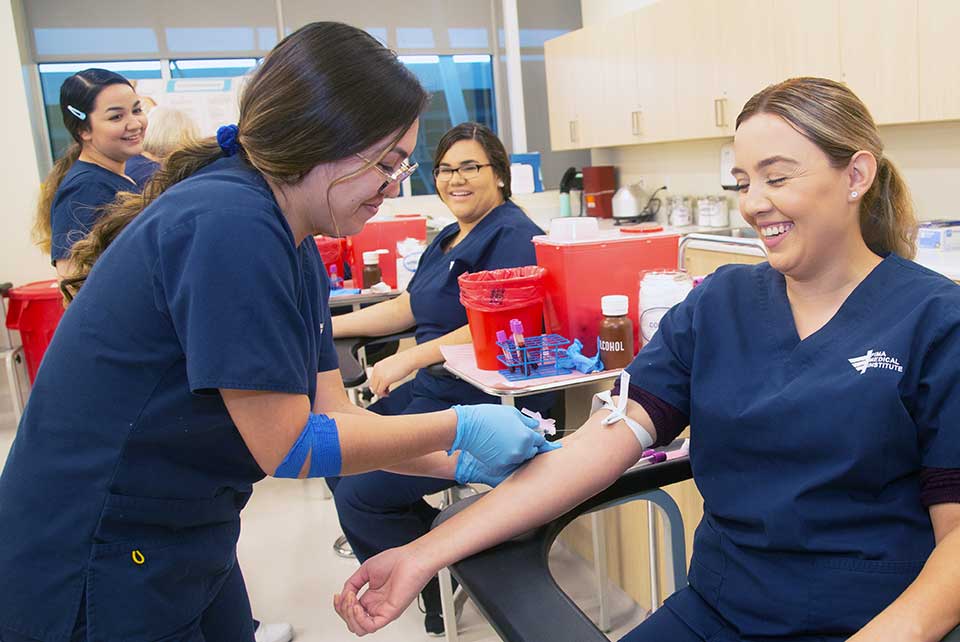
Where Can a Certified Phlebotomist Work?
Earning a phlebotomy technician certificate gives you the training you need to obtain blood specimens by venipuncture and micro-collection techniques. Phlebotomy technician courses also teach you to…
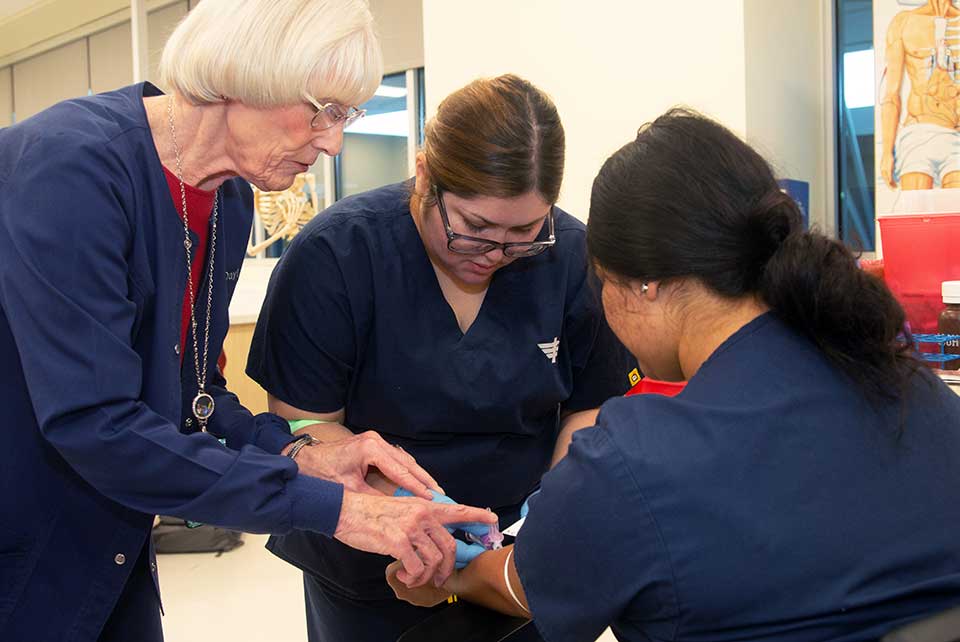
3 Common Phlebotomy Questions
If you are considering a career in healthcare, you probably have some questions about what path might be the right one for you. Well, if…
Accreditations and Disclosures
State Licensure Determination Disclosure
The Phlebotomy Technician program is offered via on-ground and hybrid delivery methods. The program is available to residents of Arizona, California, Texas, and Washington, and meets applicable licensure requirements in those states. While there may be online components, completion of this program requires on-ground attendance at the campus at which the student is enrolled and cannot be completed solely via distance education. Prospective students and enrolled students should understand that moving out of the state in which they enrolled may adversely impact a student’s ability to complete the program. If a student is planning to relocate outside of their state of enrollment he or she is required to discuss this with the Student Services Coordinator and/or Program Director.
In compliance with 34 CFR 668.43 Pima Medical Institute has made a reasonable effort to determine graduate eligibility for licensure in all states for programs designed and advertised as leading to licensure. The document below lists Pima Medical Institute programs and states where the curriculum meets licensure requirements, states where the curriculum does not meet licensure requirements, and states in which Pima Medical Institute has been unable to determine if the curriculum meets state licensure requirements. All consumers should be advised that due to the frequent changes to state statutes, rules, and regulations Pima Medical Institute cannot guarantee licensure based on the lists below.
State Licensure Determination Disclosure – Certificate Programs
Contact information for state licensing boards in which Pima Medical Institute has determined the program does not meet state licensure requirements or where Pima Medical Institute has been unable to determine if the program meets state licensure requirements can be found below.
State Licensing Board Contact Information – Phlebotomy Technician